Pages

Monday, June 3, 2013

Call for an Anti-Racist Approach in Librarianship

Lately I’ve been putting a lot of thought into how libraries and librarians can challenge racism in higher education. It is a tricky thing to talk to people about for a couple reasons. For one, a lot of people, especially White people, think of racism exclusively as something that is interpersonal, overt, and motivated by hate. It is not. While that kind of racist behavior is less socially acceptable now than it was in the past, less overt but equally harmful microaggressions are still perpetrated against people of color on a daily basis. Look no further than racist tweets, culturally appropriationist theme parties, or complaints against Affirmative Action.


Beyond these often unacknowledged slights, the institution of higher education in many ways still reflects and upholds the historic social and economic dominance of White people in America. In a thorough and insightful review, Diane Lynn Gusa describes a pervasive White institutional presence (WIP) at colleges and universities across the country. WIP manifests in a sense of superiority and entitlement among Whites, which goes hand-in-hand with monoculturalism of White culture, values, and beliefs. We see this in the curriculum where White authors and culture are the assumed normal, while other cultures are only addressed in separate courses. What do you think it feels like to be an American and a Latina majoring in English these days when authors of color are routinely excluded from “the canon”? Outside of the classroom, Whiteness is equally pervasive: the social activities, performers brought to campus, artwork, names on the buildings, and the faculty and administration. In one study by Mitzi Davis, et al. a student remarked: “A lot of time I feel out of place, because you see all White faces. You know I am the only fly in the buttermilk.” White members of these institutions often fail to recognize the pervasive markers of their identity and their privilege, while non-White members are distanced physically and socially from the community.


Another reason this conversation is difficult to have in the library community is that we see ourselves as being progressive and welcoming communities. Even if racism is taking place on our campuses, could we really be perpetuating in our libraries? Yes, I think we are. Though we may indeed be harboring a bunch of liberal malcontents, we are still a place that reflects the norms of our communities, both good and bad. Students can and do experience microaggressions, hostility, and negative stereotypes relating to their use of the library. A study by Daniel Solorzano and Miguel Ceja quotes a student:


Last time we went to the library ... to study ... obviously, it's finals time ... people are going to study. But when we walked in there looking for somewhere to sit down, it's like ... they've never seen Black people before in their lives, or they've never seen Black people study before!


Another example is the now defunct Asians Sleeping in the Library tumblr (don’t worry, Buzzfeed archived selections of it for posterity).


It is hard to say the extent of racism our students of color face because this is an issue that we have not sufficiently researched or addressed. However, the negative and alienating experiences of students of color on college campuses has been researched, and I think it is naïve and lazy to assume that the problems happening on our campuses are not happening in our libraries. As a community that prides is progressive and welcoming nature, it is time for us to address this head on.

Monday, May 6, 2013

Copyright Roundup: ACRL 2013 and in the Library Classroom


Recently I’ve been thinking about copyright and fair use, and specifically what we are telling students about these increasingly important matters. I think a lot of times we shy away from talking to students about copyright, because we are worried about giving them legal advice or because we assume that they don’t care and won’t listen. However, I think it is really important to talk to students about copyright, because we want them to be responsible users of copyrighted materials and responsible owners of copyrighted materials. If we don’t talk to them about the important social and economic issues around knowledge creation and production, where will they get their ideas about copyright from? The people who are talking the most vocally about it: big media conglomerates who have an interest in protecting their intellectual property at all costs. And if we don’t teach our students about fair use? Probably no one else will.

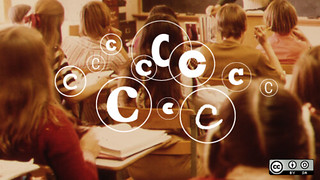
Flickr user: opensourceway

At ACRL 2013
this past month, I attended a session of three conference paper presentations that all had something to do with copyright. Jean Dryden discussed how online archives struggle with how to educate their users about copyright, and ultimately often fail to do so. I think we (librarians and other information professionals) should be taking every opportunity to talk to our users about these issues, especially in the case of archives, where we are the copyright holders or at least stewards of those copyrights. 

In the same session, James Neal, described the challenges and dangers we face on the intellectual property landscape. Corporate media interests and lobbyists are exerting pressure in Washington, D.C. for copyright reform in their favor, and the new director of the U.S. copyright office is indicating that she is looking for a new set of major copyright reforms. The Supreme Court and other courts have recently taken on a number of cases around copyright and intellectual property. Digital rights management is ever encroaching on our ability to own and use copyrighted materials. What have we been doing to be a part of or even a lead in these conversations? Neal pointed out that when professional bodies create ‘best practices’ they often undermine risk taking. In my favorite line of his talk, Neal reminded us, “Fair use is not civil disobedience; it is our most important tool and must be preserved.” 

Katie Fortney actually provided a great example of how we can use and protect fair use in her talk describing the creation of the Grateful Dead digital archive. She described how they triaged the items going into the collection, deciding if and how they would try to get permission from the copyright holders. For the 23,000 items that they posted under the presumption of fair use, they have received only 15 takedown notices and no claims of copyright infringement. Fortney said that it is misguided to allow fears about copyright guide our decisions about what to put into digital collections—we should be trying to make the best and most useful collections and we can use fair use to do so.

So what does this mean for reference and instruction librarians? I find that opportunities to talk about copyright and fair use come up all the time, and it is pretty easy to slip in some quick information about copyright. When students want to search for images, I send them to Flickr and show the advanced search options for Creative Commons licensed materials. When I cover citations in instruction sessions, I bring in the concept of fair use. (Kevin Smith this week laid out the three questions he tells students (and faculty) to ask themselves when considering fair use: “First, will the “quotation” of the original help me make my point?  Second, will it help my reader/viewer get the point?  Finally, did I use no more than necessary to make my point?”) In fact, I’ve had very engaged discussions with first year students on these topics, because these students have all run up against DRM when downloading or streaming music and videos online. This is a great way to talk about ownership and knowledge production, and to highlight the different norms in different communities. This is precisely the kind of information literacy I want my students to have because it so clearly translates from their academic selfs to their social and professional selfs. 

As I asked above, if we don’t talk to them about these things, who will?

Monday, April 29, 2013

Update on the Outrageous Costs of College Textbooks and a Useful Alternative


From the dp.la Women's Activism Exhibit
While none of this is shockingly new information, I was outraged afresh when a colleague emailed me this Huffington Post  article about the college textbook racket.  The article was written in response to an American Enterprise Institute post that showed college textbook prices rising faster than he Consumer Price Index, new home prices, and the average cost of medical care.  Cripes.

In happier news, last week saw the launch of an excellent open educational resource, the Digital Public Library of Amerca.  While the collection is still growing, some of the thoughtful features of the collection are already apparent: you can search material by era, geographical location, and theme.  I particularly like the Activism in the U.S. exhibit, which has already grown since I checked it out last week.